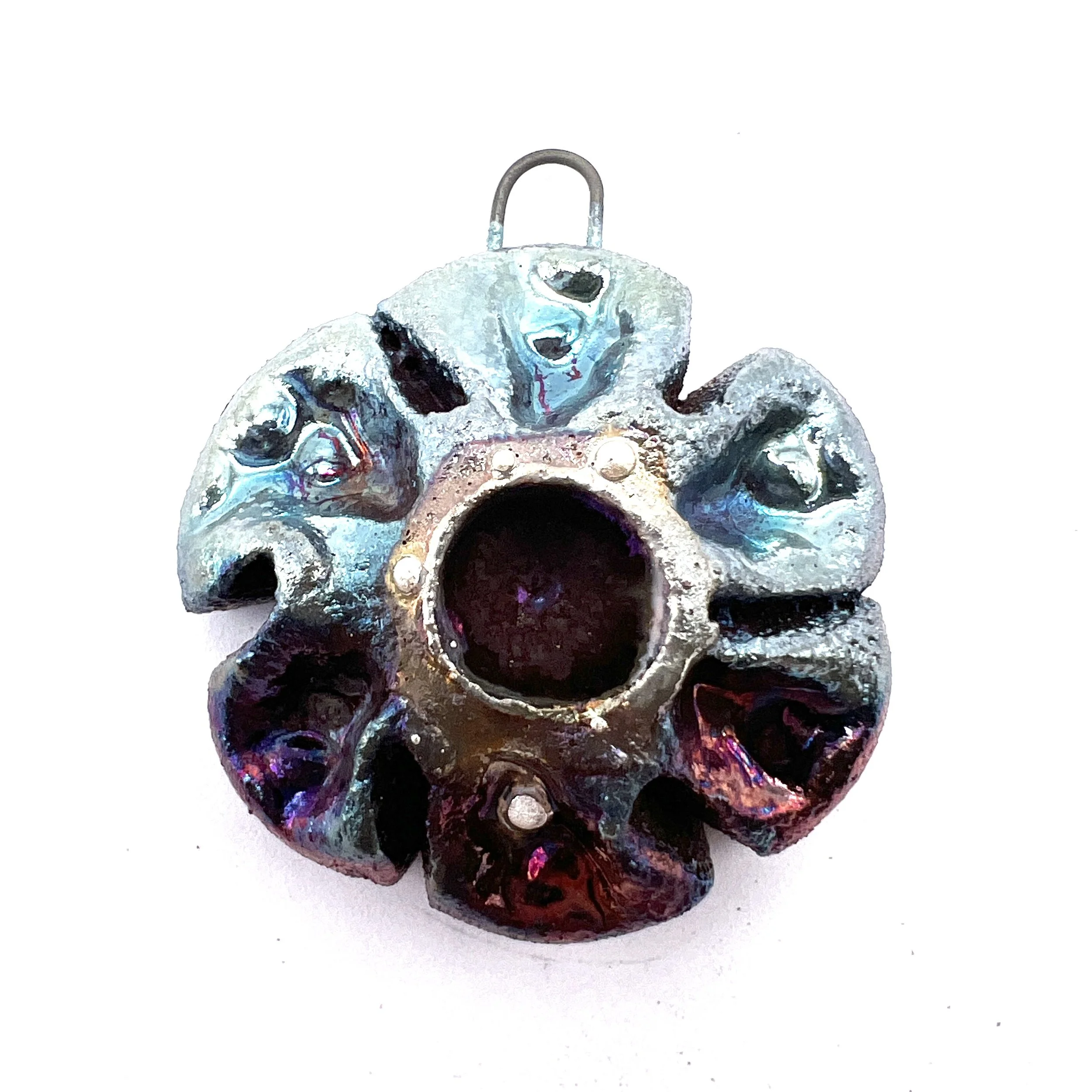
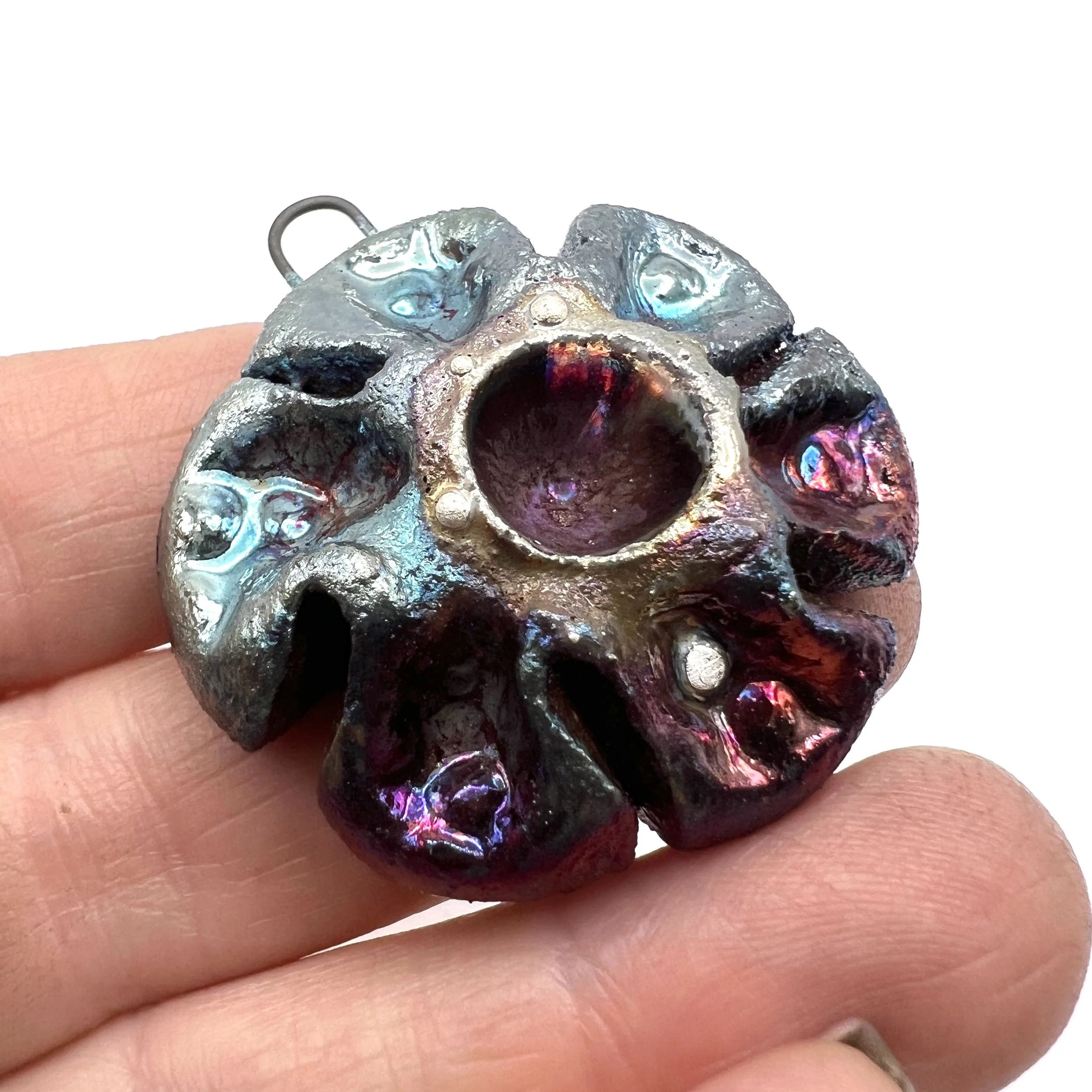
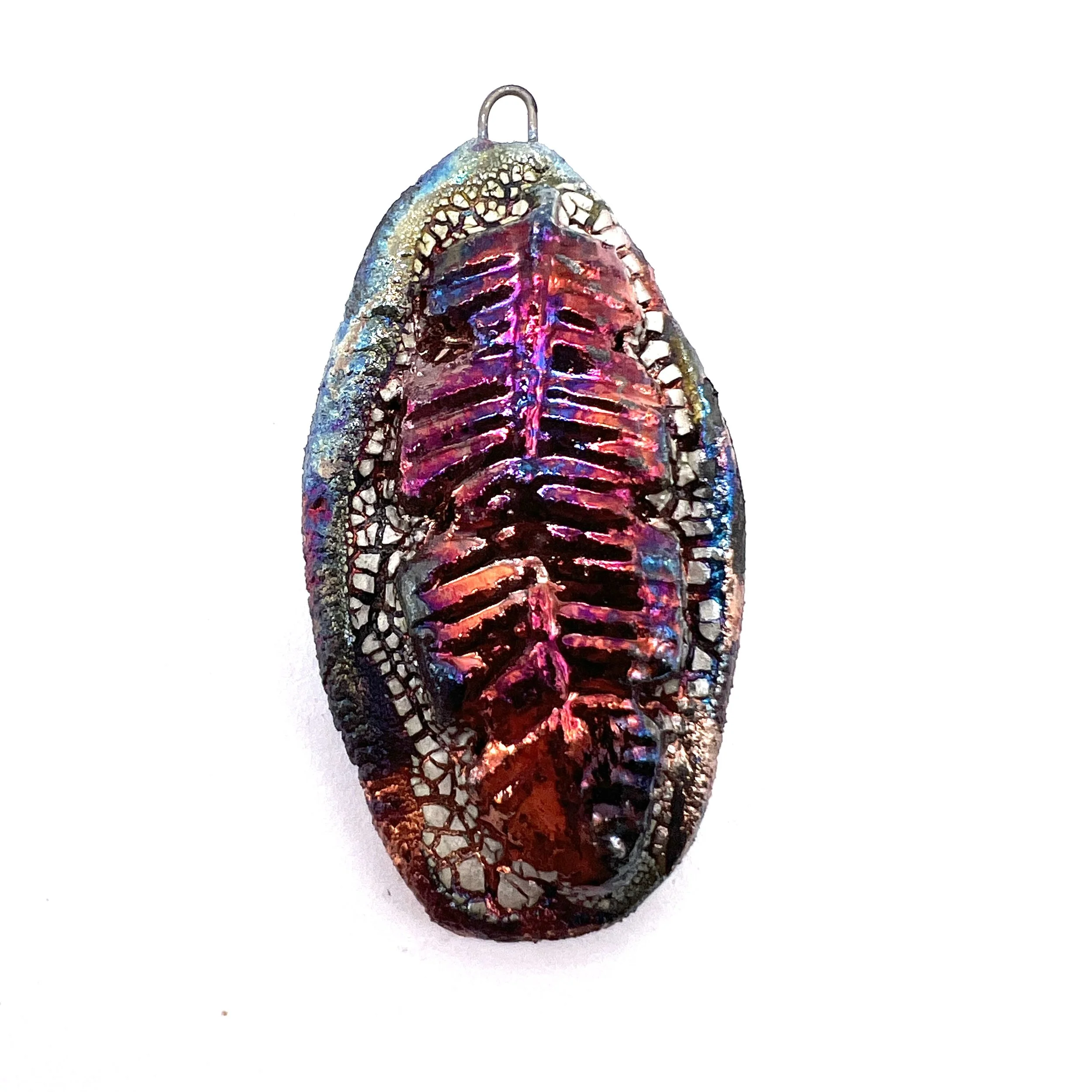
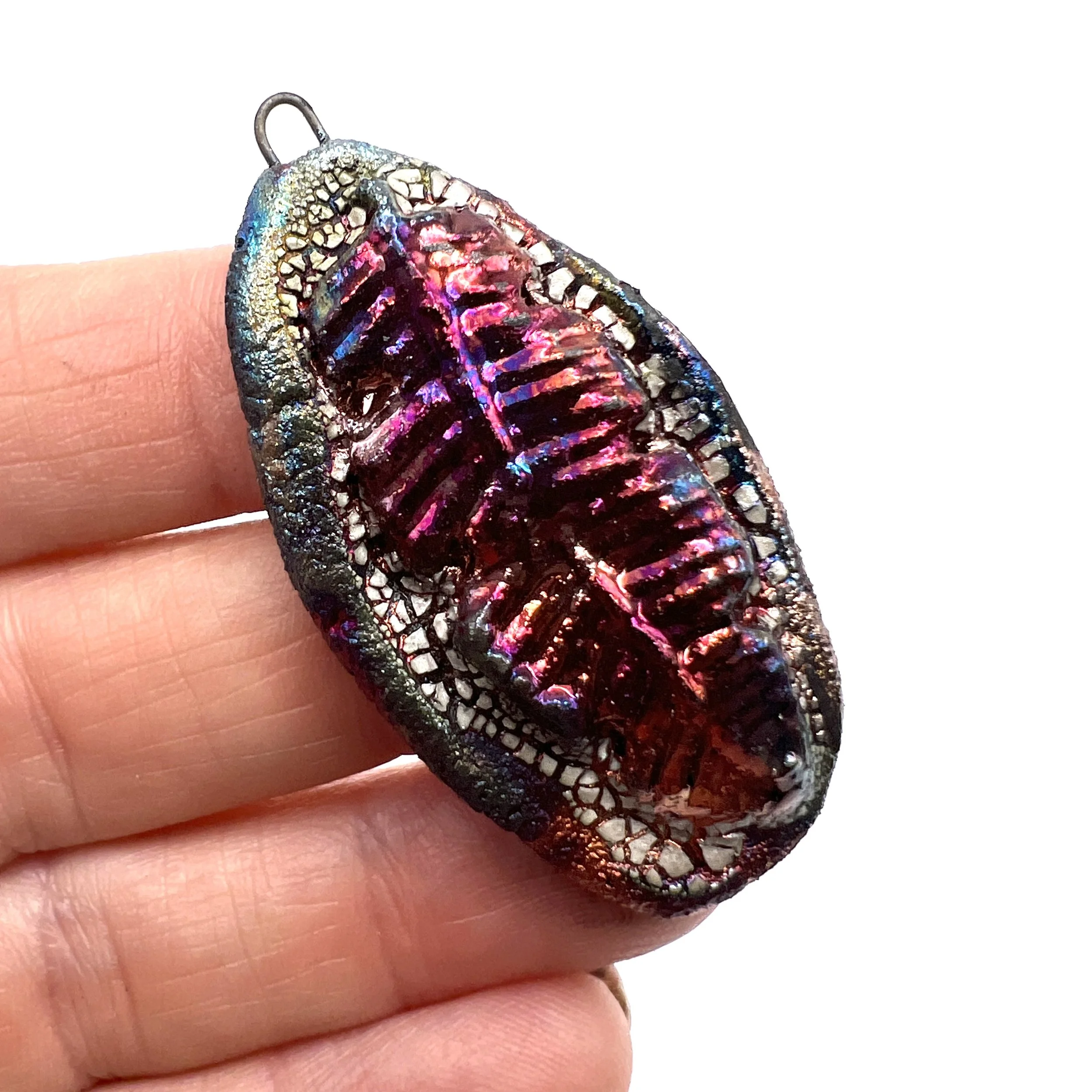
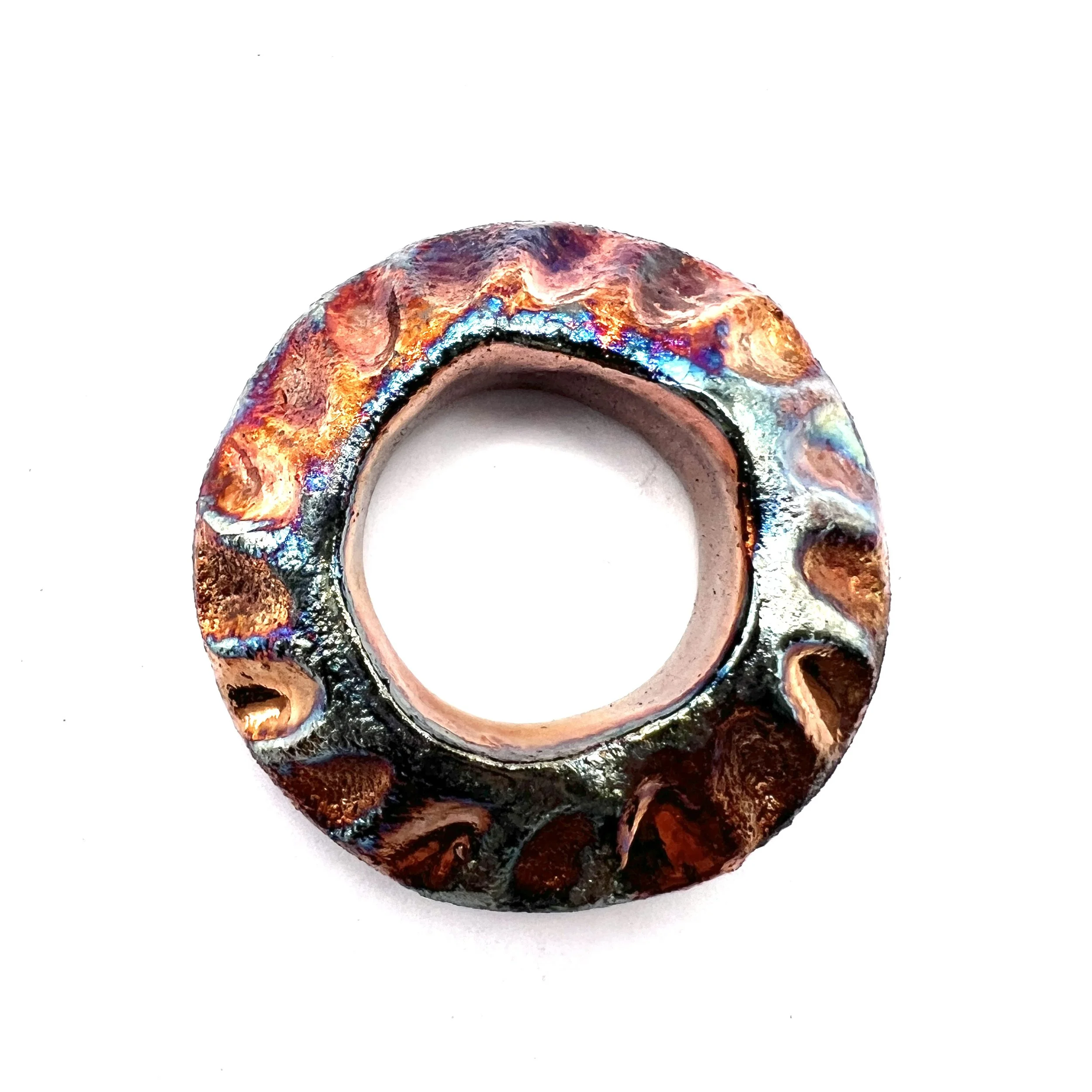
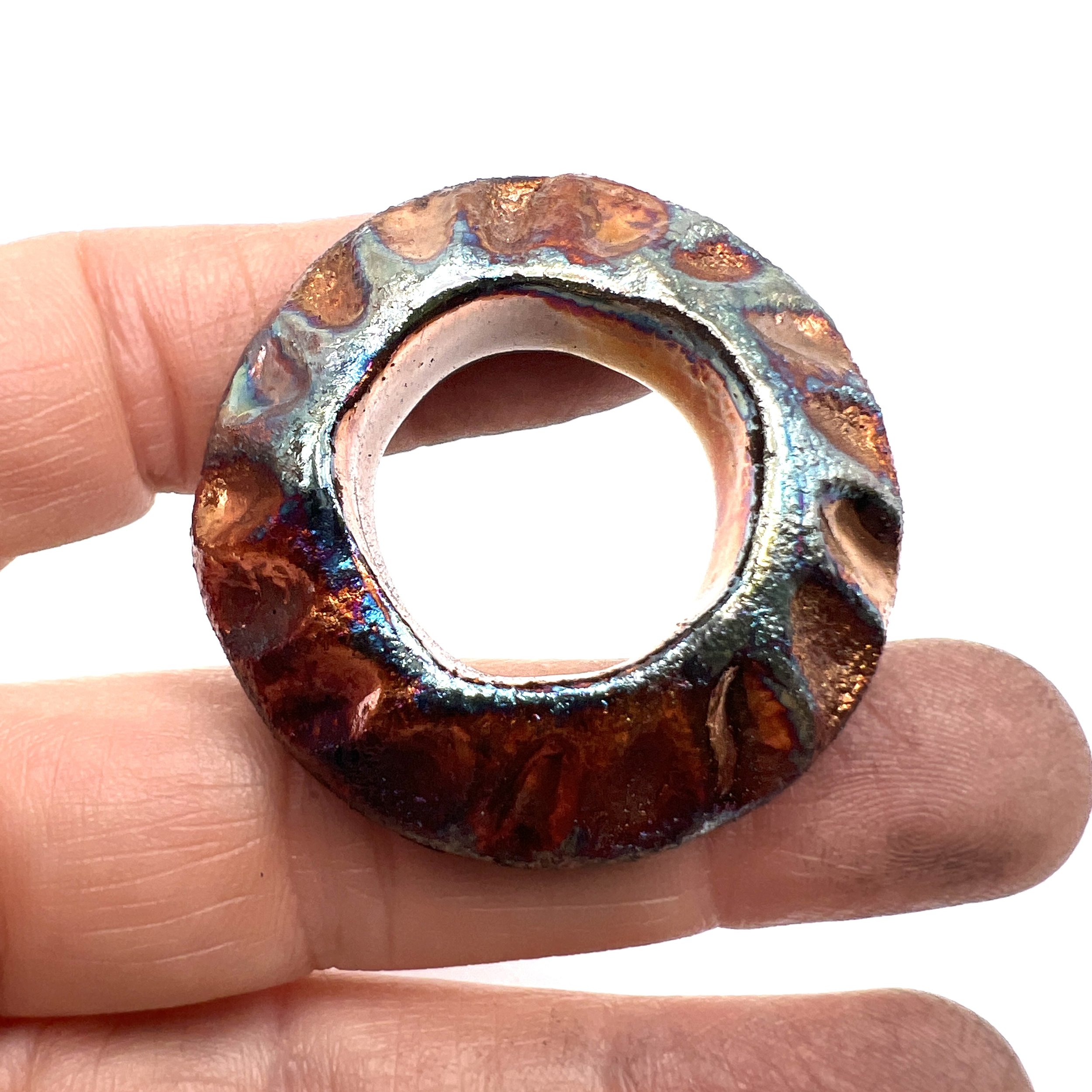
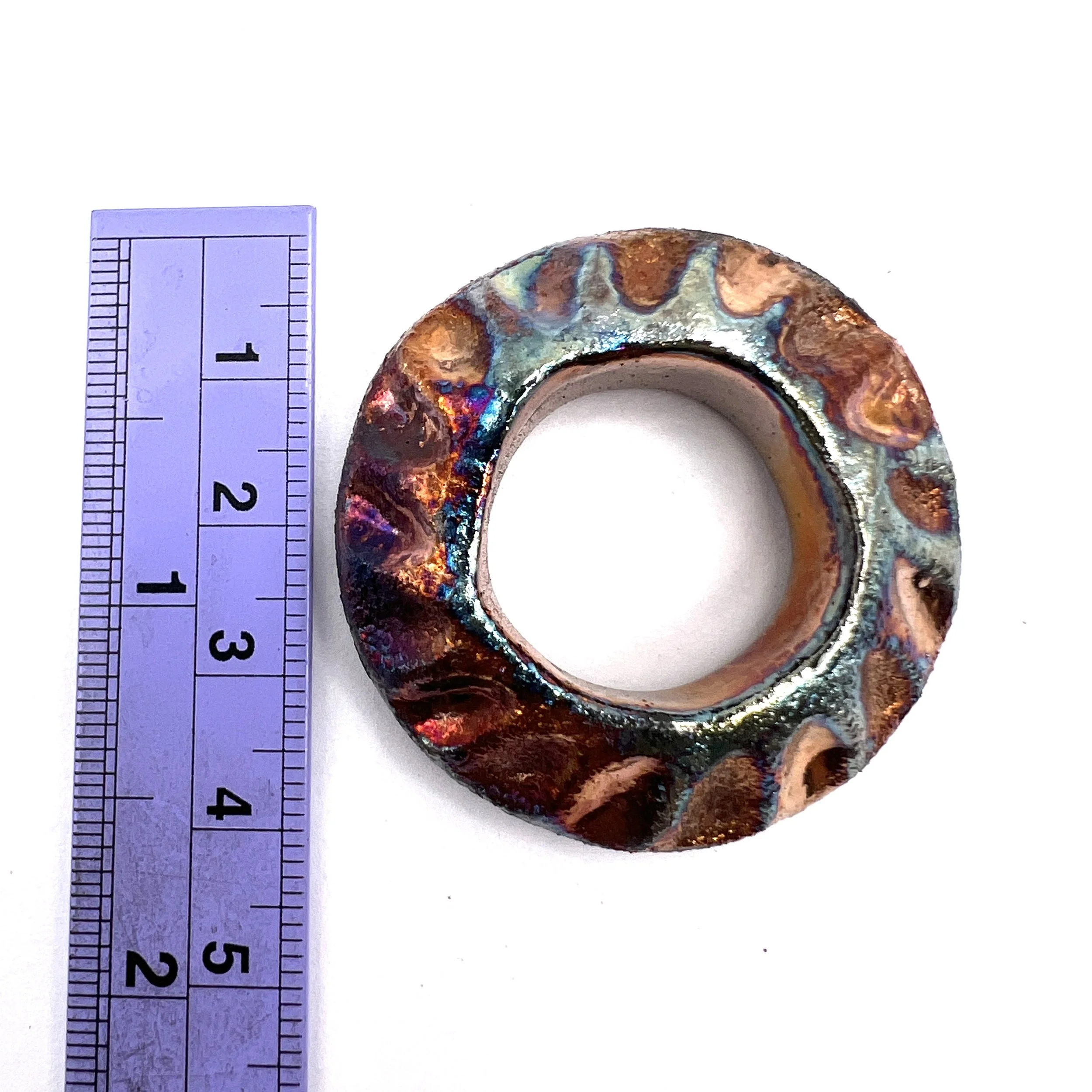
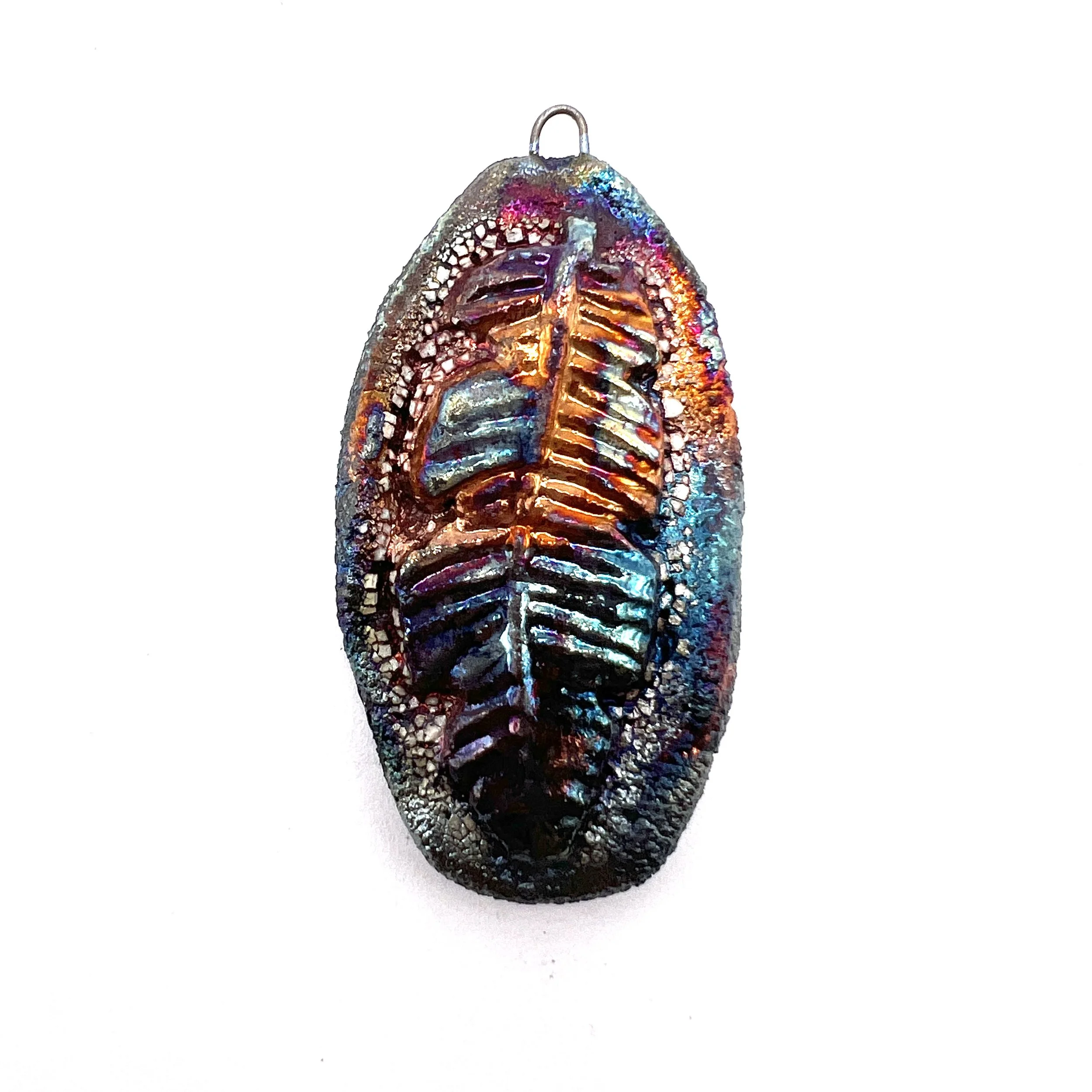
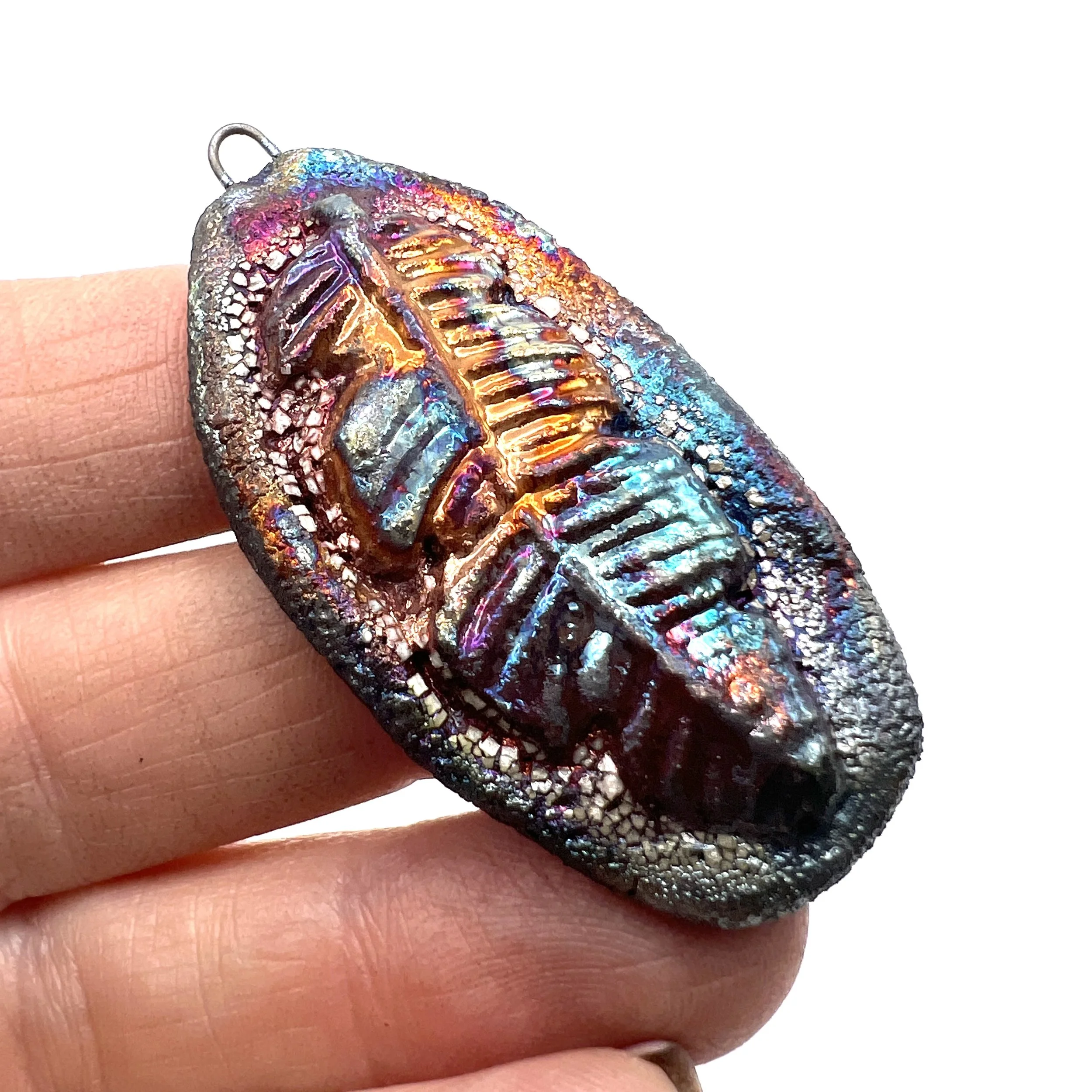
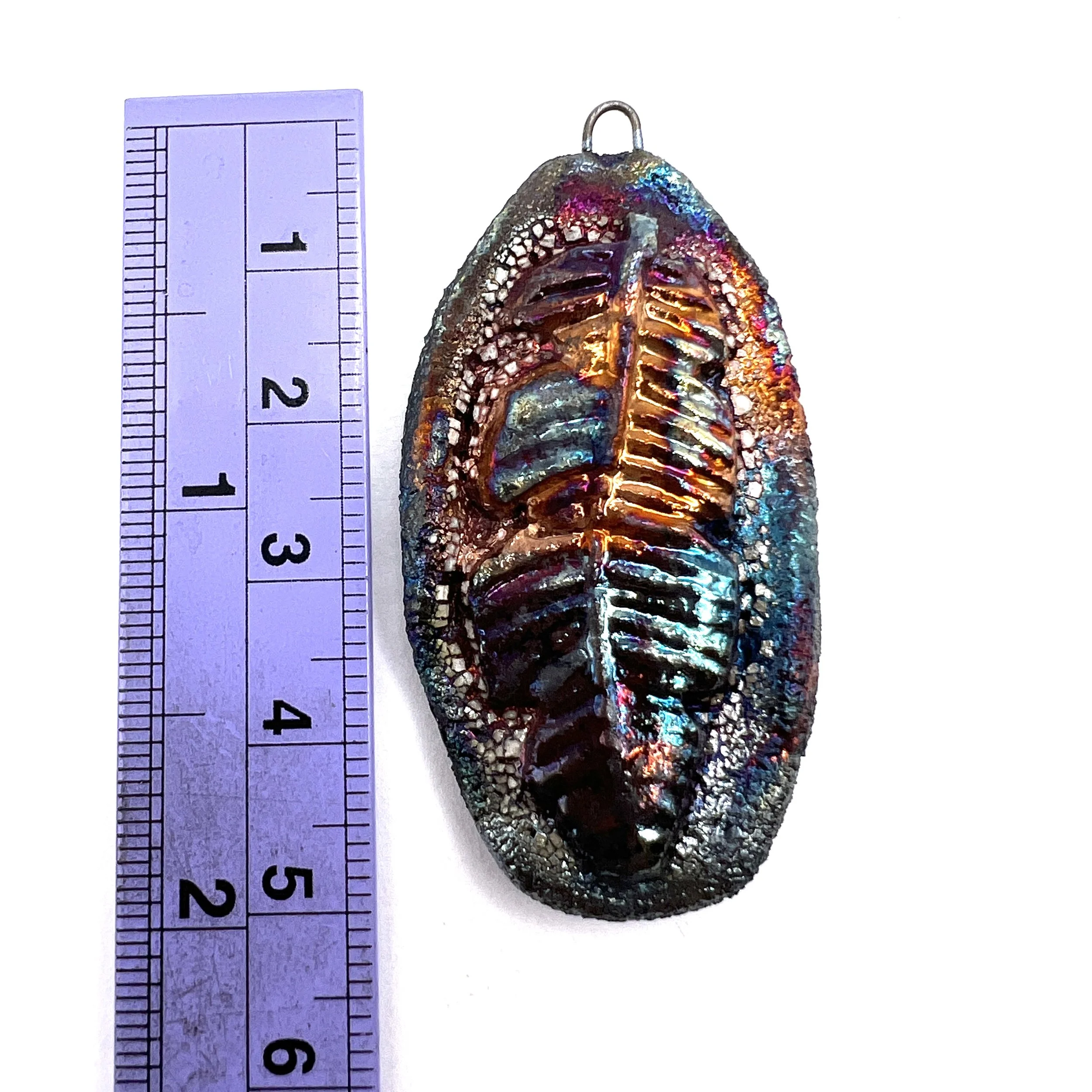
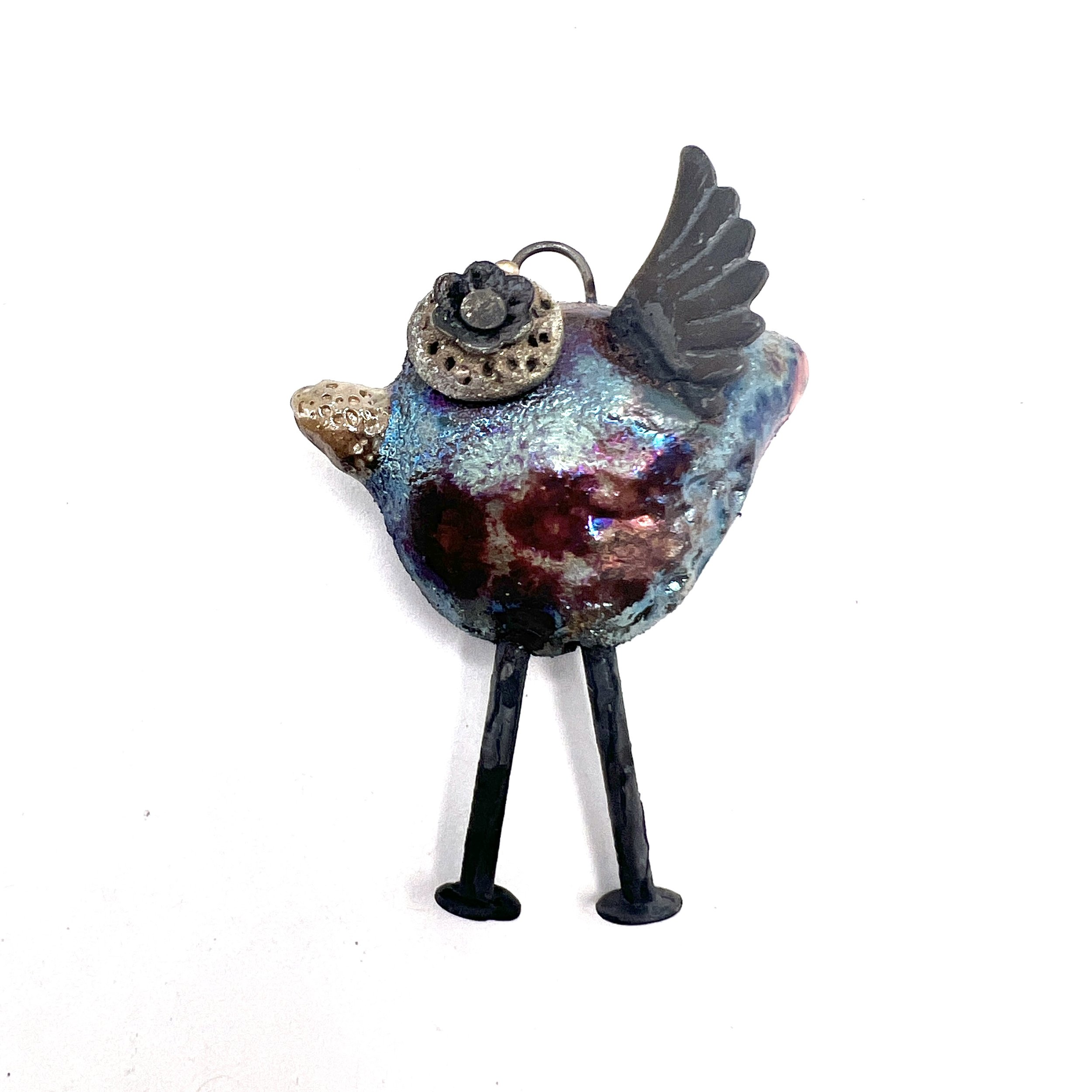
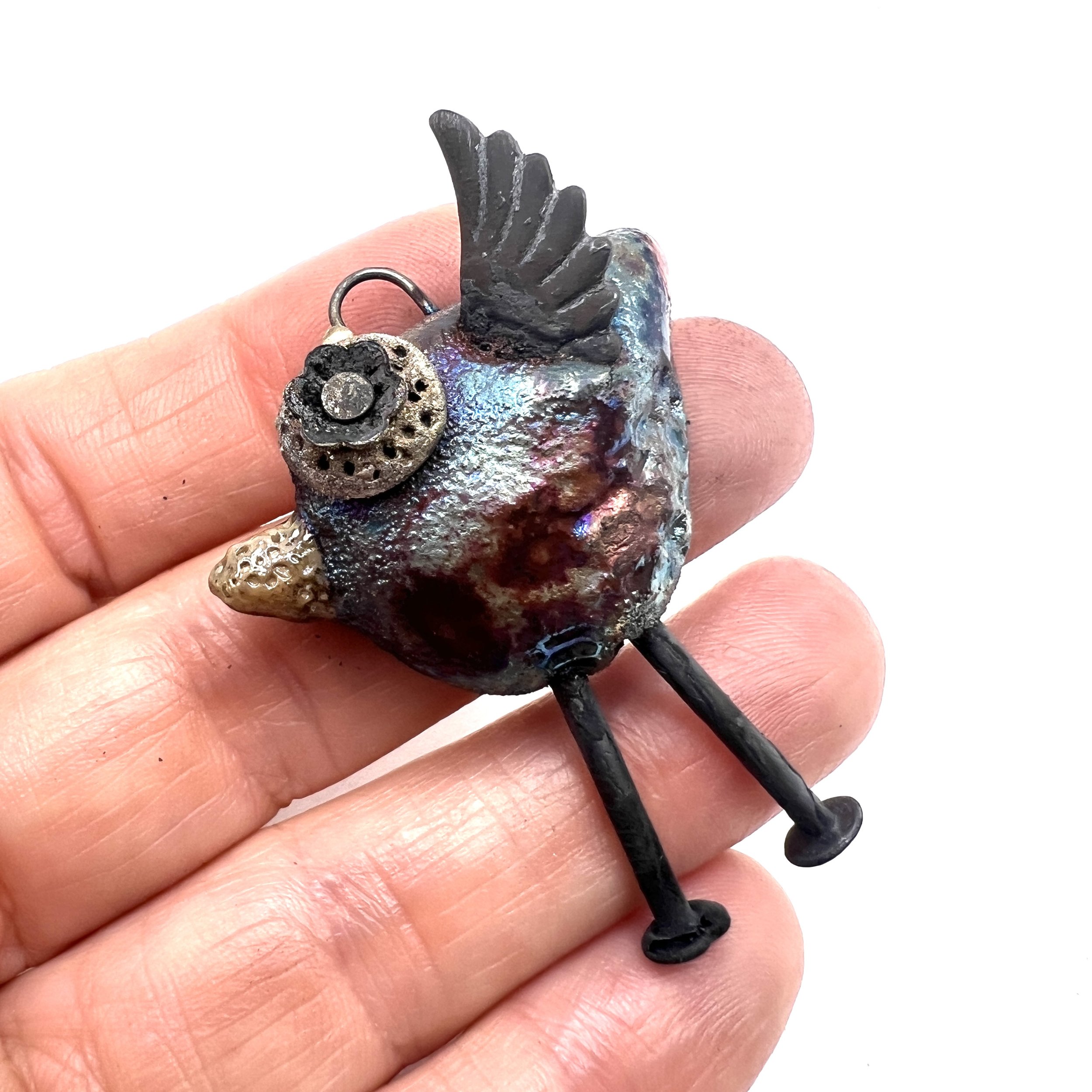
A one-of-a-kind large statement Raku-fired pendant commands attention with its dramatic scale and singular surface — each piece born from unpredictable thermal shock and smoky reduction that yield iridescent lusters, crackled glazes, and unique metallic highlights. Hand-formed from clay and finished with layered glazes, this pendant showcases rich contrasts between deep, burnished blacks and vibrant copper, turquoise, or plum tones that shift with the light; visible hairline cracks and organic texture tell the story of its kiln journey, making no two pendants alike. Suspended on a simple leather cord or hand-forged bail, it becomes an architectural focal point that elevates minimalist or bohemian wardrobes alike, offering wearable artistry that feels both ancient and modern. Appropriate for collectors and those who seek jewelry with a tactile, elemental presence, this statement piece pairs equally well with clean lines or layered looks and arrives with a certificate describing its firing process and unique glaze notes.
Make a statement!
*I handmade this pendant out of clay
*Bisque fired, glazed, and raku fired in my studio
*Black from the raku firing process where there is no glaze.
*Fine silver fired onto the piece
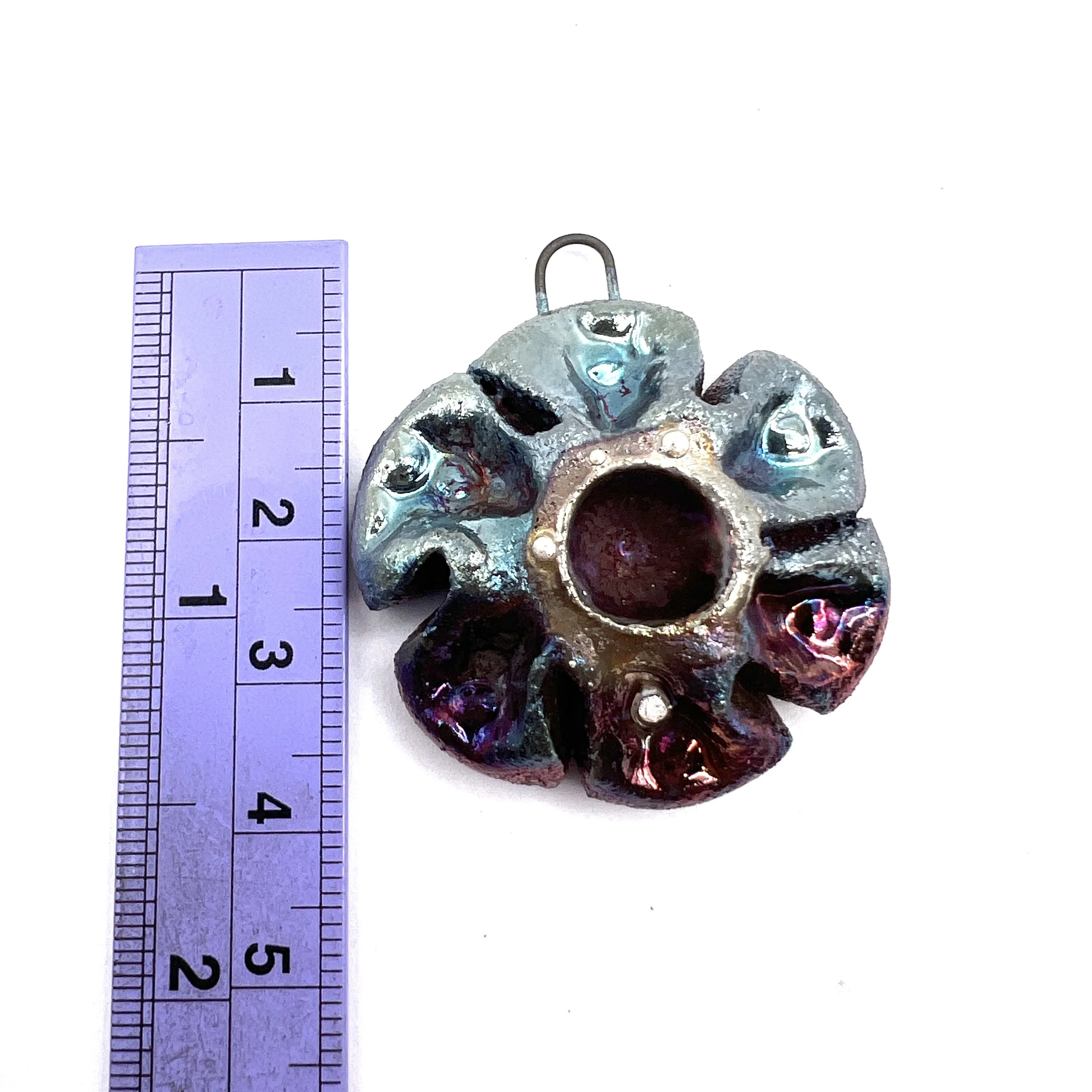
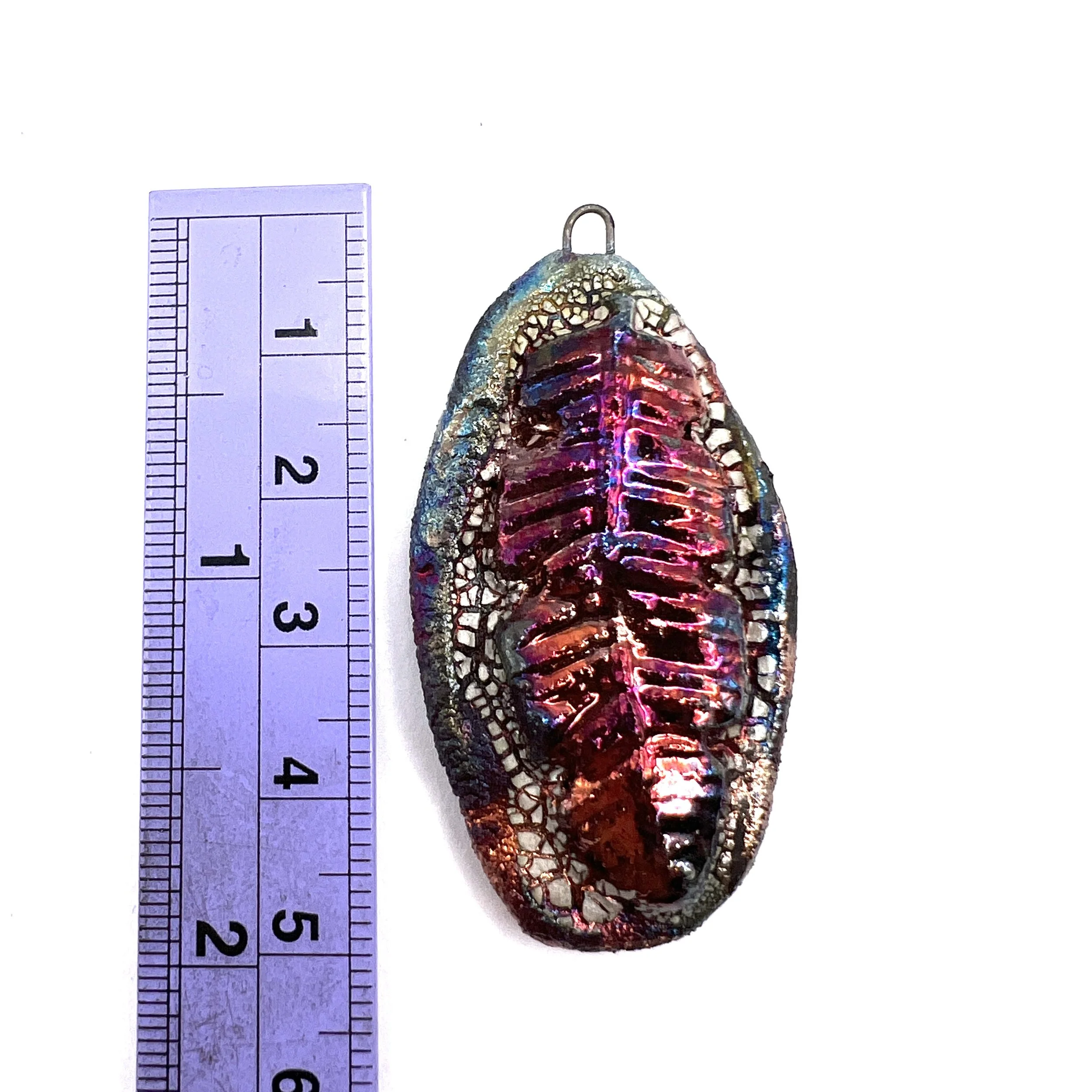
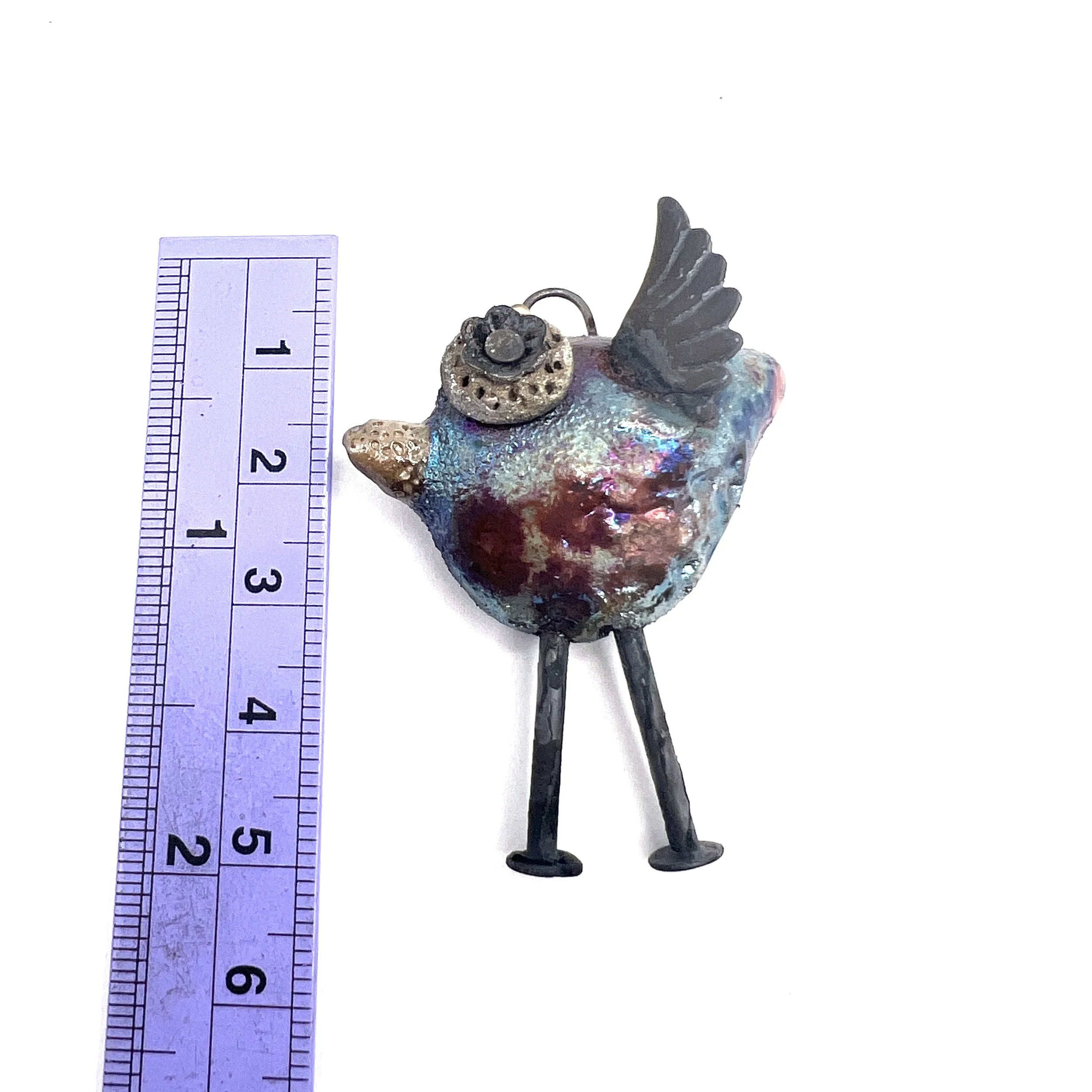
*See photo for measurements
*Signed by the artist (that's me!) on the back "MAKU"
Thanks for looking! Hope you enjoy my art!
THE RAKU PROCESS:
Raku pottery was made long ago for Japanese tea ceremonies. It was modernized later into the process you see today. This involves taking a piece of pottery that has been bisque fired and glazed then firing it in a raku kiln. The piece is then fired to about 1800 degrees F and pulled out of the kiln while still red hot then placed in a reduction chamber containing organic materials such as newspaper, sawdust, leaves, etc. The materials catch on fire, the lid is put on very quickly and carefully. The fire wants oxygen to keep going and flames often shoot across a piece, pulling oxygen from the glaze. The matte black color (a very unique characteristic of raku) is created where there is no glaze. It's so exciting and creates one of kind colors which are very hard to duplicate. Please note that raku is not food safe nor is it intended to hold liquid.
Caring for your raku piece:
Raku is fragile, please handle with care. Keep your raku in an air tight container or zippered bag when storing. Do not swim or leave your piece in water. Keep your piece out of direct sunlight, as it will affect the glaze. I wash my pieces very well, but on occasion you will see some ash residue that will rub off from the parts that are not glazed. This will come out of your clothing with no problem, but if it concerns you, you can paint clear nail polish on the back of a piece.
A one-of-a-kind large statement Raku-fired pendant commands attention with its dramatic scale and singular surface — each piece born from unpredictable thermal shock and smoky reduction that yield iridescent lusters, crackled glazes, and unique metallic highlights. Hand-formed from clay and finished with layered glazes, this pendant showcases rich contrasts between deep, burnished blacks and vibrant copper, turquoise, or plum tones that shift with the light; visible hairline cracks and organic texture tell the story of its kiln journey, making no two pendants alike. Suspended on a simple leather cord or hand-forged bail, it becomes an architectural focal point that elevates minimalist or bohemian wardrobes alike, offering wearable artistry that feels both ancient and modern. Appropriate for collectors and those who seek jewelry with a tactile, elemental presence, this statement piece pairs equally well with clean lines or layered looks and arrives with a certificate describing its firing process and unique glaze notes.
Make a statement!
*I handmade this pendant out of clay
*Bisque fired, glazed, and raku fired in my studio
*Black from the raku firing process where there is no glaze.
*Fine silver fired onto the piece
*See photo for measurements
*Signed by the artist (that's me!) on the back "MAKU"
Thanks for looking! Hope you enjoy my art!
THE RAKU PROCESS:
Raku pottery was made long ago for Japanese tea ceremonies. It was modernized later into the process you see today. This involves taking a piece of pottery that has been bisque fired and glazed then firing it in a raku kiln. The piece is then fired to about 1800 degrees F and pulled out of the kiln while still red hot then placed in a reduction chamber containing organic materials such as newspaper, sawdust, leaves, etc. The materials catch on fire, the lid is put on very quickly and carefully. The fire wants oxygen to keep going and flames often shoot across a piece, pulling oxygen from the glaze. The matte black color (a very unique characteristic of raku) is created where there is no glaze. It's so exciting and creates one of kind colors which are very hard to duplicate. Please note that raku is not food safe nor is it intended to hold liquid.
Caring for your raku piece:
Raku is fragile, please handle with care. Keep your raku in an air tight container or zippered bag when storing. Do not swim or leave your piece in water. Keep your piece out of direct sunlight, as it will affect the glaze. I wash my pieces very well, but on occasion you will see some ash residue that will rub off from the parts that are not glazed. This will come out of your clothing with no problem, but if it concerns you, you can paint clear nail polish on the back of a piece.
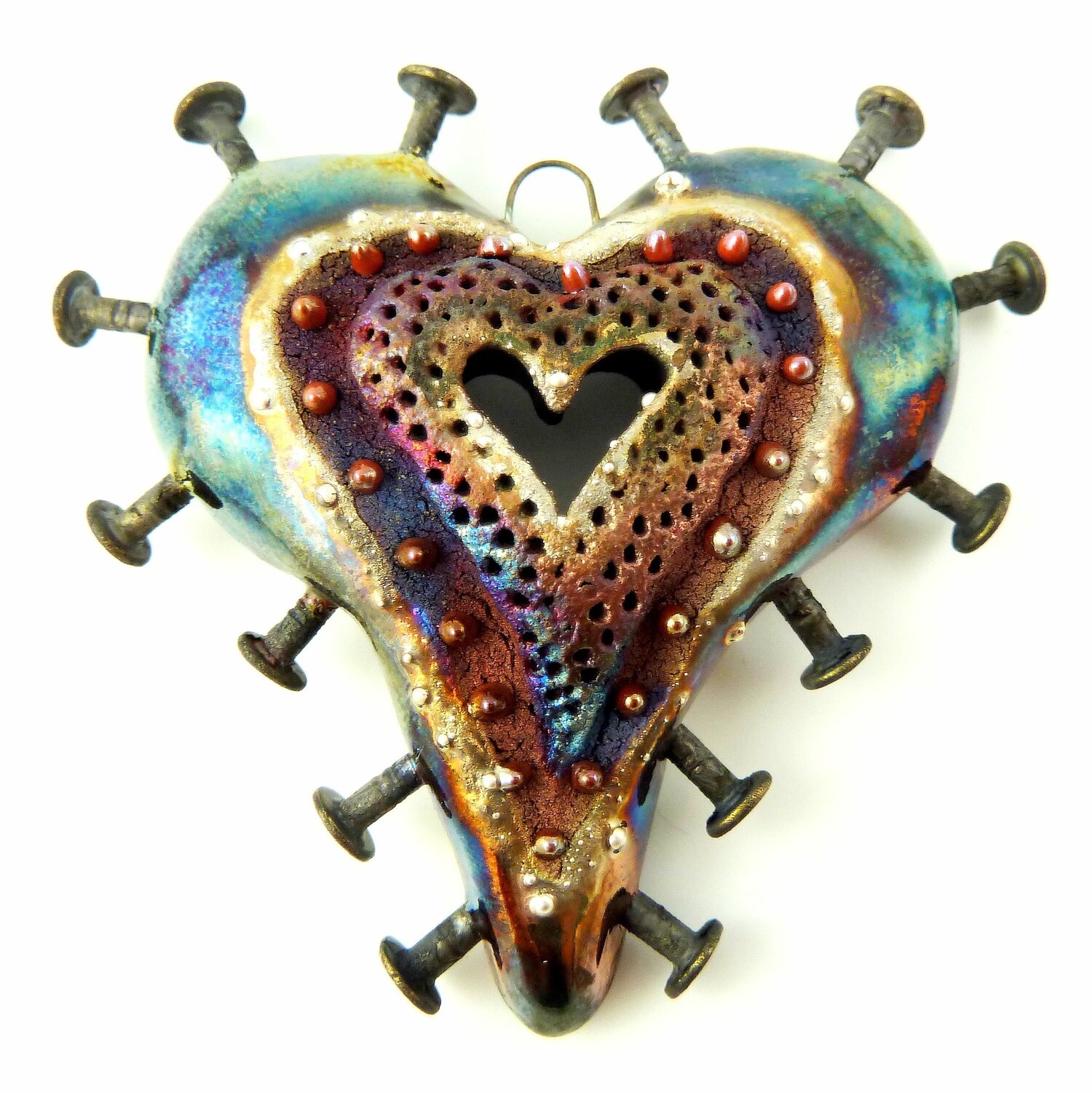
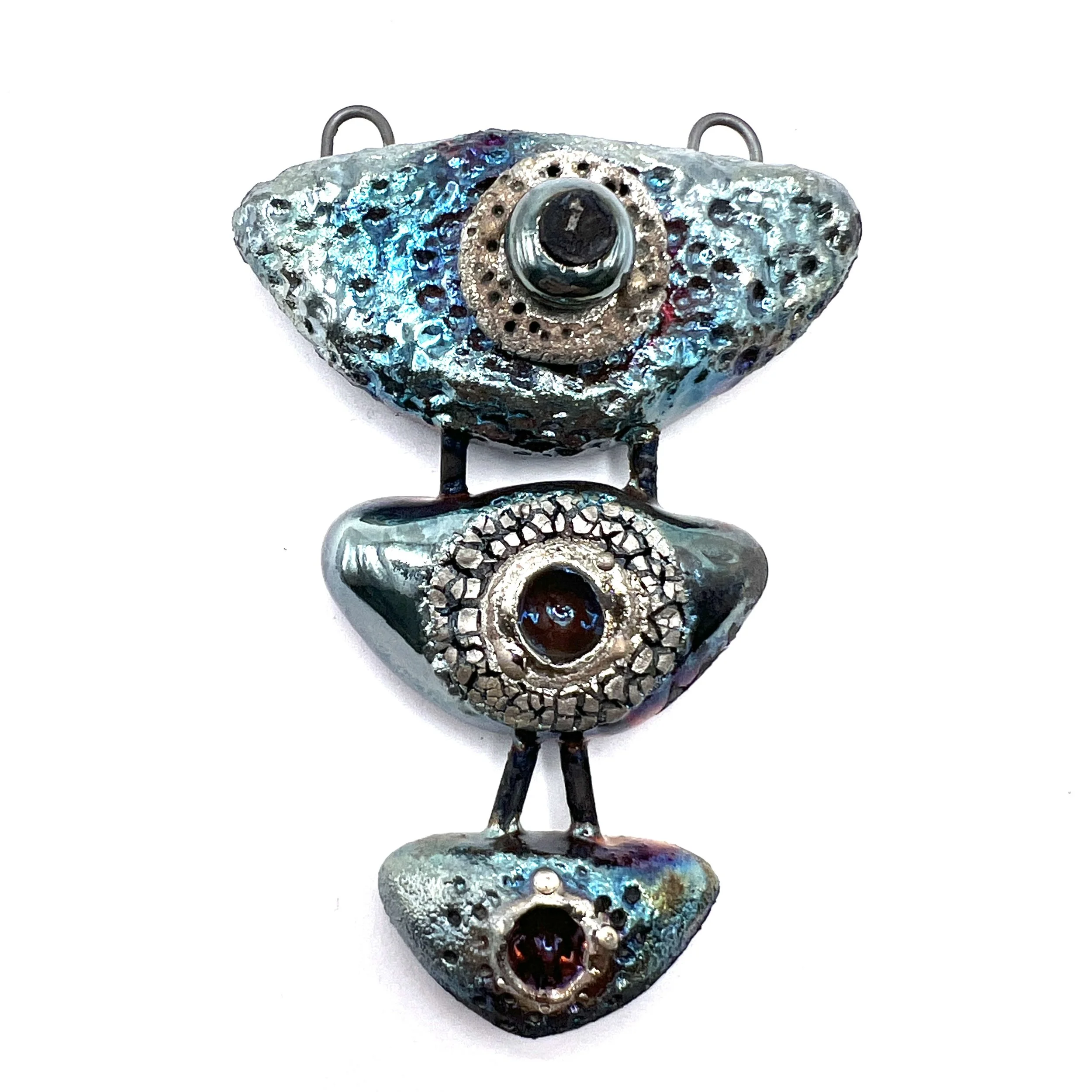 Image 1 of 6
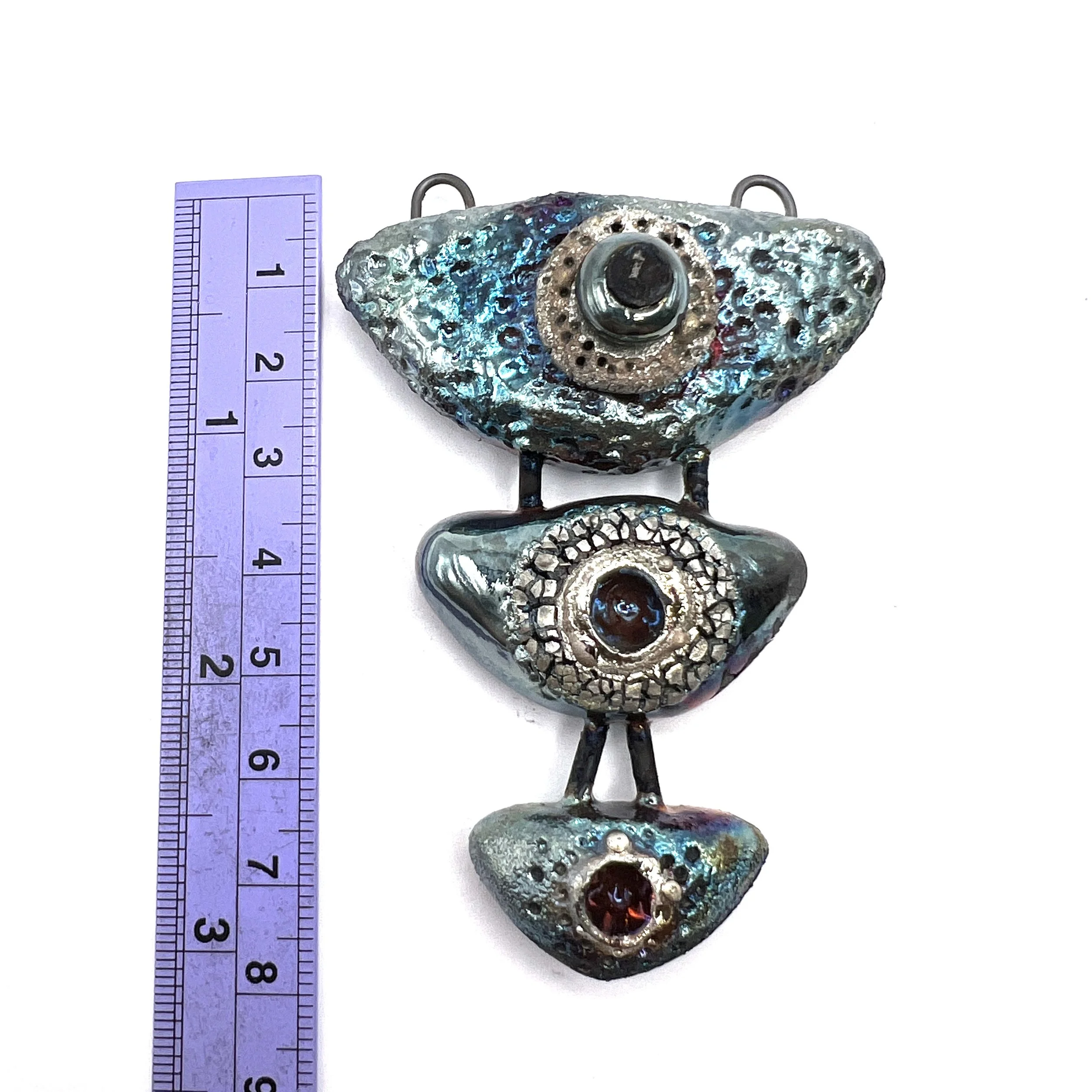 Image 2 of 6
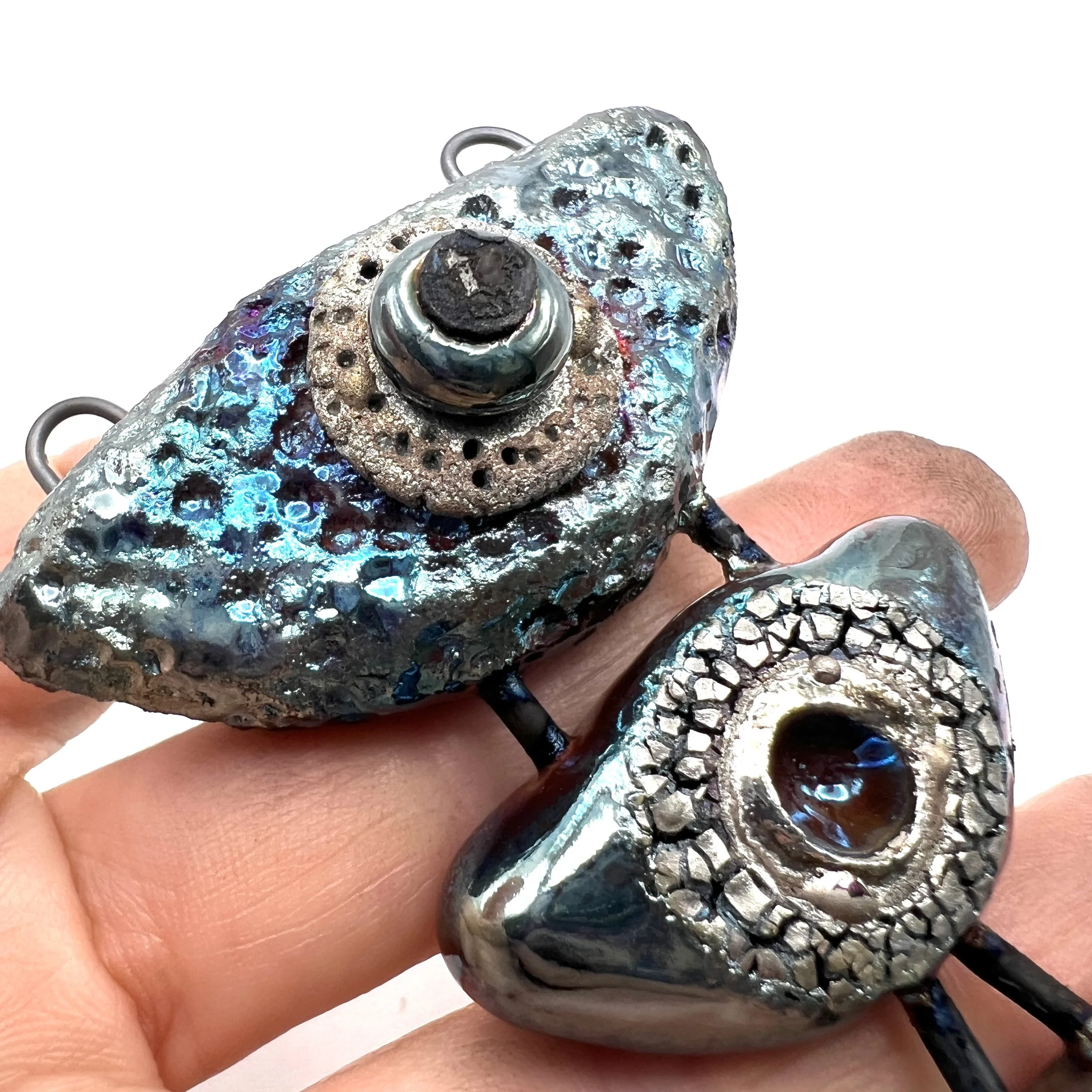 Image 3 of 6
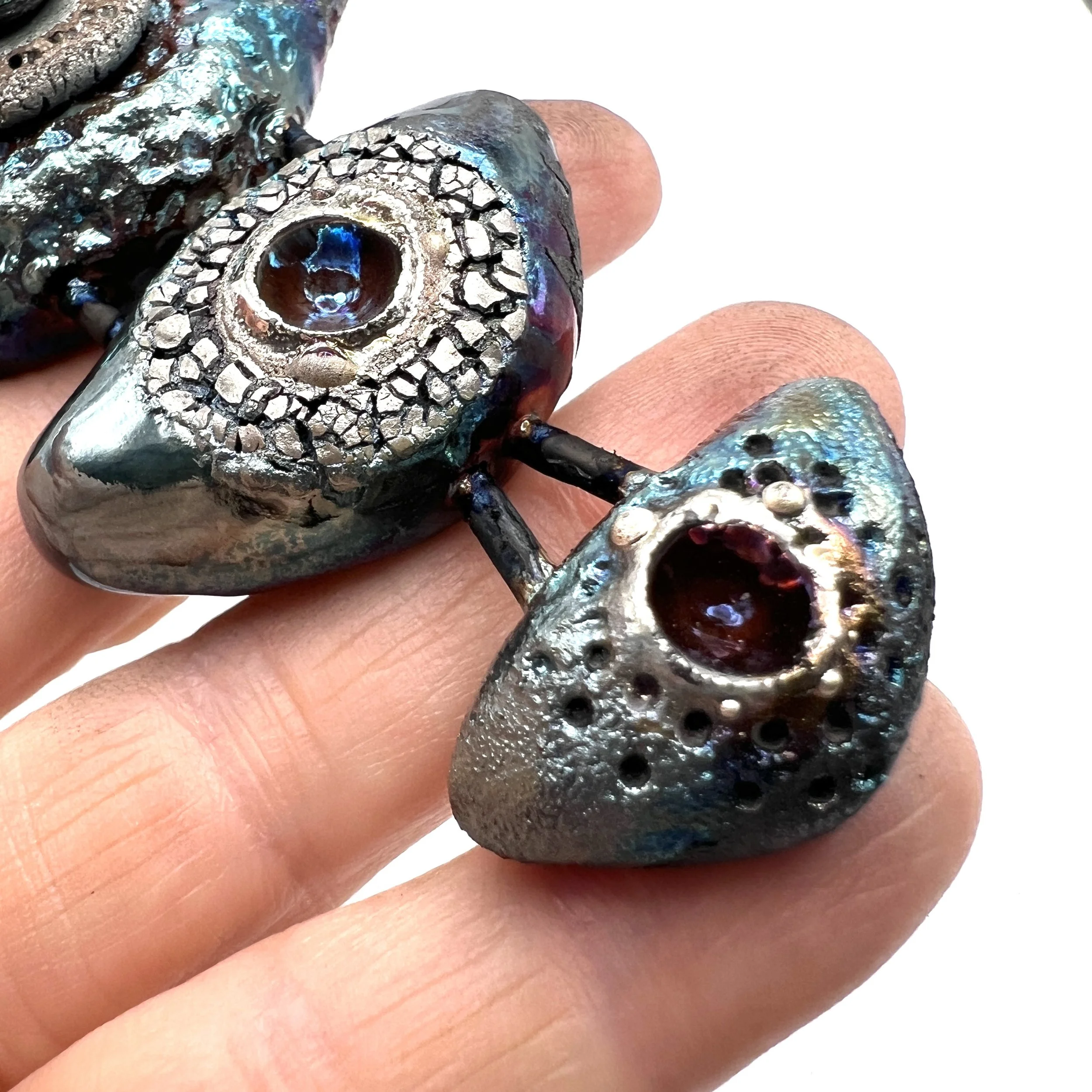 Image 4 of 6
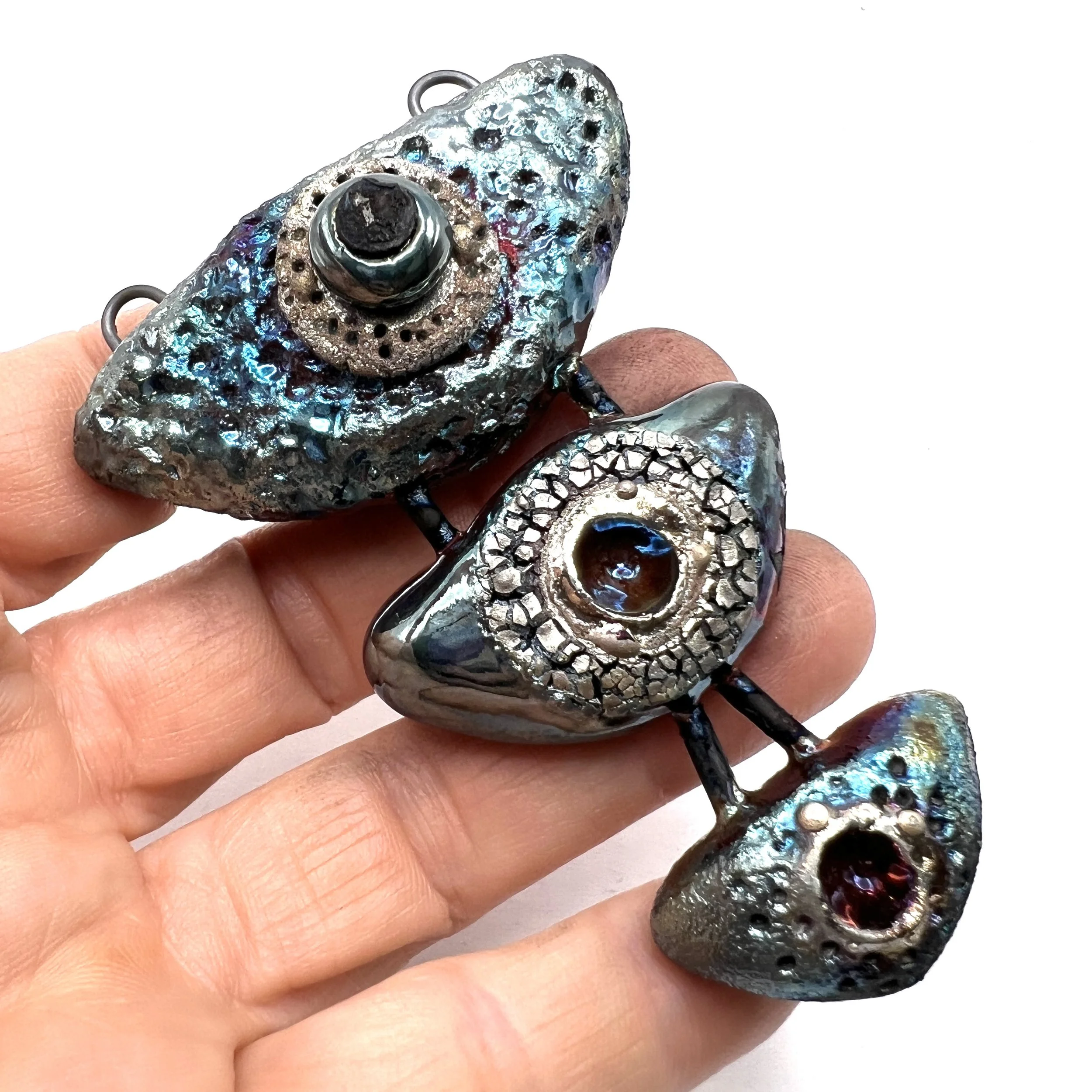 Image 5 of 6
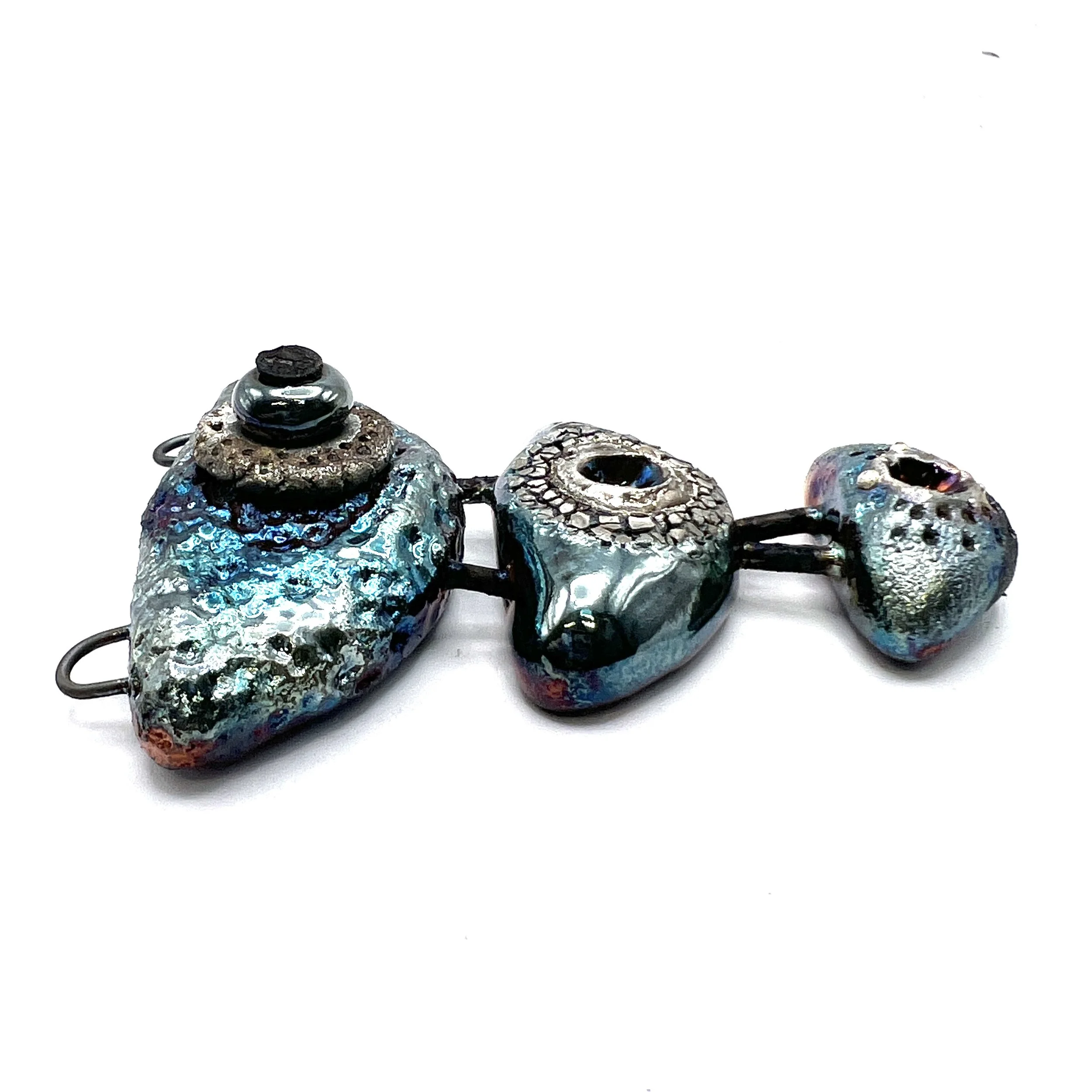 Image 6 of 6